
Then the honeymoon period ends.
Some players reach the endgame and discover that progression has become repetitive. Others become frustrated by monetization systems, daily obligations, or content that feels designed around keeping them logged in rather than keeping them entertained.
Meanwhile, somewhere else on the internet, a relatively small community is still playing a version of Ragnarok Online, RF Online, or another MMORPG originally associated with an entirely different generation of gaming.
Its graphics are dated. Its interface is inconvenient. Its combat may feel slow by modern standards.
Yet the players continue showing up.
Why?
The answer is not simply nostalgia. It involves the economics of game development, the psychology of progression, the importance of social relationships, and a fundamental misunderstanding of what makes an MMORPG worth returning to.
Modern MMORPGs Are Expensive to Build and Even Harder to Sustain
Creating a modern MMORPG requires considerably more than designing a large map and filling it with monsters.
Developers need server infrastructure, networking systems, account security, combat balancing, quest design, character progression, persistent databases, customer support, anti-cheat measures, and systems capable of handling thousands of simultaneous player interactions.
They must also create enough content to support players who consume updates at dramatically different speeds.
A casual player might spend a month completing a storyline that a dedicated player finishes in several days.
Both expect the game to remain interesting afterward.
This creates a difficult economic problem: the more ambitious the MMORPG becomes, the more expensive it is to maintain the experience that players expect.
Unlike a traditional single-player game, an MMORPG does not simply end when the credits roll. Its developers must continue operating and updating the world.
Even a successful launch is only the beginning of the financial commitment.
Why Building a New MMORPG Is Not the Same as Running an Existing One
One reason classic private servers can appear unusually resilient is that they often begin with a fundamentally different development challenge.
A team building a new MMORPG must create an entire game ecosystem. A team operating a server based on an existing MMORPG is usually working with an established game structure, although the availability and legality of the underlying software vary considerably.
That distinction matters.
The original game already established its character classes, visual identity, equipment systems, monsters, and much of its progression structure.
Server operators may focus on modifying rates, adjusting balance, managing events, maintaining infrastructure, and supporting a community rather than inventing an entire MMORPG from scratch.
This does not make operating a server effortless. Security, stability, database integrity, player support, and fair administration remain serious responsibilities.
However, the difference in scope helps explain why a small community can sometimes maintain an older game experience while a professional studio struggles to launch a completely new virtual world.
For a related discussion of the technical and organizational differences, Indonesian MMORPG publication IANDREW examines why developing a new MMORPG is more difficult than maintaining a private server.
There is also an important legal distinction. Not every private server is authorized by the original game’s rights holders. Operating or distributing unauthorized game software can raise copyright, contractual, and other legal issues depending on the circumstances and jurisdiction.
Lower development costs do not automatically make a private server legitimate or sustainable.
Classic MMORPGs Were Often Built Around Social Dependency
One of the biggest differences between many older MMORPGs and modern online games is how strongly players depend on one another.
In older MMORPGs, progression could be painfully slow without cooperation.
A healer needed a party. A tank needed damage dealers. A guild needed dedicated members to organize equipment, resources, and territory battles.
Players sometimes spent more time discussing strategy, recruiting teammates, and negotiating trades than fighting monsters.
From a modern design perspective, some of those systems look inconvenient.
But inconvenience can produce social interaction.
When a player repeatedly encounters the same people while leveling, those encounters can develop into friendships, rivalries, or long-term guild relationships.
The game becomes more than its mechanics.
It becomes a familiar social environment.
Modern MMORPGs often attempt to reduce friction by introducing automatic matchmaking, solo-friendly questing, instant travel, and streamlined progression.
These features improve accessibility. They can also reduce the need for spontaneous cooperation if implemented without meaningful social alternatives.
Neither approach is universally superior, but the difference helps explain why certain classic communities remain attached to their games.
Ragnarok Online: A World That Players Learned to Inhabit
Ragnarok Online is an especially useful example because its identity extends far beyond its original graphics.
Players remember towns, class builds, monster locations, trading areas, and guild rivalries.
They remember spending hours collecting materials or searching for rare equipment.
Some remember the frustration of losing progress after a mistake.
Others remember meeting people who eventually became friends outside the game.
The original experience was not always convenient or balanced.
Yet those imperfections contributed to a recognizable world with its own culture.
Classic Ragnarok communities can preserve particular versions of that experience, especially when players prefer older class systems or progression structures.
However, the survival of individual communities depends on competent administration, stable hosting, legal circumstances, and player participation.
Not every Ragnarok private server lasts. Many close, reset, or lose their populations.
The communities that endure are the visible exceptions, not proof that private servers are inherently more successful than official MMORPGs.
RF Online and the Appeal of Persistent Rivalries
RF Online illustrates another aspect of classic MMORPG loyalty: faction identity.
Its race-based conflict gives players a reason to care about more than their individual character statistics.
When players identify strongly with a faction, a guild, or a long-running rivalry, their motivation becomes social and competitive.
They return because other people are returning.
They want to defend their faction, participate in battles, or challenge familiar opponents.
This kind of social continuity is difficult to reproduce through content updates alone.
A new MMORPG can introduce spectacular bosses and expensive cinematics, but those features do not automatically create years of shared history between players.
Community history must develop over time.
Why Better Graphics Do Not Guarantee a Better MMORPG
Visual quality matters. Good animation, readable interfaces, and immersive environments can substantially improve a player’s experience.
But MMORPGs are not judged only by how they look.
A beautiful world becomes less interesting when players have no compelling reason to interact with it.
Consider a hypothetical modern MMORPG with advanced lighting, detailed characters, and an enormous open world.
If every activity leads to the same repetitive daily checklist, the technical achievement may not translate into lasting enjoyment.
Now consider an older game with simple environments but meaningful guild competition, a functioning player economy, and difficult group content.
Its graphics may be inferior, yet its social systems may give players stronger reasons to return.
The lesson is not that graphics are unimportant.
It is that presentation and long-term engagement solve different problems.
The Progression Problem: When Convenience Removes Meaning
Older MMORPGs frequently required substantial time investments.
Leveling could take weeks. Rare equipment could demand repeated farming sessions. Reaching a milestone often required patience and cooperation.
Modern developers have good reasons to reduce excessive grinding.
Players have jobs, families, and other responsibilities. An MMORPG that requires endless repetition can exclude people who cannot spend several hours online every day.
However, shortening progression introduces another design challenge.
If players can reach the highest level almost immediately, what makes the achievement meaningful?
The answer should not be simply adding more mandatory daily tasks.
Meaningful progression can come from mastering difficult encounters, experimenting with character builds, contributing to guild goals, or participating in a dynamic economy.
Classic MMORPGs sometimes created meaning through scarcity and effort, although they could also become unnecessarily punishing.
Modern MMORPGs must find ways to create satisfying accomplishments without treating players’ time as an unlimited resource.
Daily Quests Can Turn a Virtual World Into a Second Job
Many live-service games use recurring activities to encourage regular engagement.
Daily quests, weekly rewards, seasonal passes, and limited-time events can provide useful structure.
They give players clear objectives and help maintain activity between major updates.
The problem emerges when missing a day feels like falling behind.
A player may log in not because the game is enjoyable, but because an expiring reward creates pressure to complete another checklist.
Over time, this can change the emotional relationship between player and game.
Entertainment begins to resemble obligation.
Classic MMORPGs were not free from repetitive tasks, but some players preferred systems where they could choose their own goals rather than follow a constantly refreshed list of scheduled activities.
A modern MMORPG that wants long-term loyalty should distinguish between giving players reasons to return and making them feel punished for leaving.
Monetization Can Undermine the Meaning of Progress
Modern MMORPGs need revenue to pay developers, maintain servers, and fund updates.
Subscriptions, cosmetic purchases, expansions, and other monetization models can support those costs.
Problems arise when players believe that spending money has become more important than playing well.
In a progression-based game, fairness matters because players compare their achievements with those of others.
If one player spends weeks earning equipment while another can purchase a substantially stronger advantage, the first player may question the purpose of the progression system.
This does not mean every paid convenience feature is equally harmful.
The effects depend on the game’s competitive structure, economy, balance, and community expectations.
Private servers can face similar problems.
Some operators monetize through cosmetic donations or optional services. Others introduce powerful paid equipment, preferential treatment, or systems that undermine competitive trust.
A server’s age or unofficial status does not make its monetization fair.
The relevant question is whether players understand the rules and believe those rules are applied consistently.
Trust May Be More Valuable Than Content Volume
MMORPG communities invest substantial time in persistent characters.
Players accumulate equipment, currency, achievements, and relationships over months or years.
That investment creates expectations.
Players expect their progress to remain available. They expect administrators to enforce rules consistently. They expect major changes to be communicated clearly.
When those expectations are violated, the damage can extend beyond one controversial update.
A player who no longer trusts the administrators may hesitate to invest another hundred hours in the game.
This is especially important for small private servers, where decisions made by a limited number of operators can directly affect the entire community.
Unexplained resets, inconsistent enforcement, or opaque item distribution can quickly damage confidence.
Successful long-running communities tend to depend on predictable administration and transparent communication, although no server is immune to disputes or mistakes.
The Economics of Running a Small MMORPG Community
Private servers can sometimes operate with smaller teams and narrower ambitions than commercial MMORPG projects.
That does not mean their operating costs are negligible.
A server may need to pay for hosting, backups, security, development, community moderation, and technical support.
It also needs people who are willing and able to maintain the project over time.
Consider a hypothetical server with 500 active players.
Its operators might prioritize stability, community events, and incremental balance changes rather than expensive cinematic expansions.
This can be a manageable approach if the project has adequate resources and operates lawfully.
But it also introduces concentration risk.
If one developer leaves, an administrator loses interest, or hosting costs become unsustainable, the entire project may be affected.
A small server can survive with fewer players than a major commercial release, but it may also be more vulnerable to individual operational failures.
Why Players Keep Returning to Old MMORPGs
When someone returns to an old MMORPG, they may not be searching for the best combat system or the largest world.
They may be searching for a familiar rhythm.
Perhaps they remember gathering in a particular town before a guild event.
Perhaps they enjoyed a class system that rewarded unusual character builds.
Perhaps they simply want a slower game where social interaction matters more than completing a weekly battle pass.
Nostalgia can motivate the initial return, but it cannot always sustain long-term participation.
If a returning player encounters unstable servers, unfair administration, or an empty community, fond memories may not be enough.
Long-term retention requires the present-day experience to provide genuine value.
The Survivorship Bias Behind Legendary Private Servers
Discussions about private servers often focus on the most memorable success stories.
Players point to communities that have operated for many years and use them as evidence that classic MMORPGs are healthier than modern games.
But this comparison can be misleading.
For every well-known long-running community, there may be many smaller servers that closed, reset repeatedly, or failed to attract a stable population.
Those unsuccessful projects receive much less attention.
This is an example of survivorship bias: evaluating a category primarily through the examples that remained visible.
Official MMORPGs also experience closures and population declines, but a fair comparison must consider failures on both sides.
The continued existence of a particular classic server demonstrates that a community can remain committed to an old game.
It does not establish that private servers, as a whole, have superior survival rates.
What Modern MMORPG Developers Can Learn From Classic Communities
Classic MMORPG communities offer several lessons, but copying every old mechanic would be a mistake.
1. Give Players Reasons to Depend on Each Other
Meaningful group activities can create relationships that last beyond individual content updates.
Cooperation should feel rewarding rather than artificially inconvenient.
2. Make Progression Feel Earned
Achievements should reflect understandable goals, player decisions, and meaningful challenges.
Progression does not need to be painfully slow to feel valuable.
3. Protect the Integrity of the Game Economy
Item generation, currency supply, trading rules, and monetization can affect player trust.
Developers should explain major economic changes and consider their consequences.
4. Treat Community Management as Part of Game Design
Moderation, communication, dispute resolution, and predictable enforcement influence whether players feel comfortable investing time in a persistent world.
5. Respect Players Who Take Breaks
Returning after a month away should not feel like being punished for having responsibilities outside the game.
Well-designed catch-up systems can preserve accessibility without erasing the achievements of dedicated players.
Why Modern MMORPGs Still Have Important Advantages
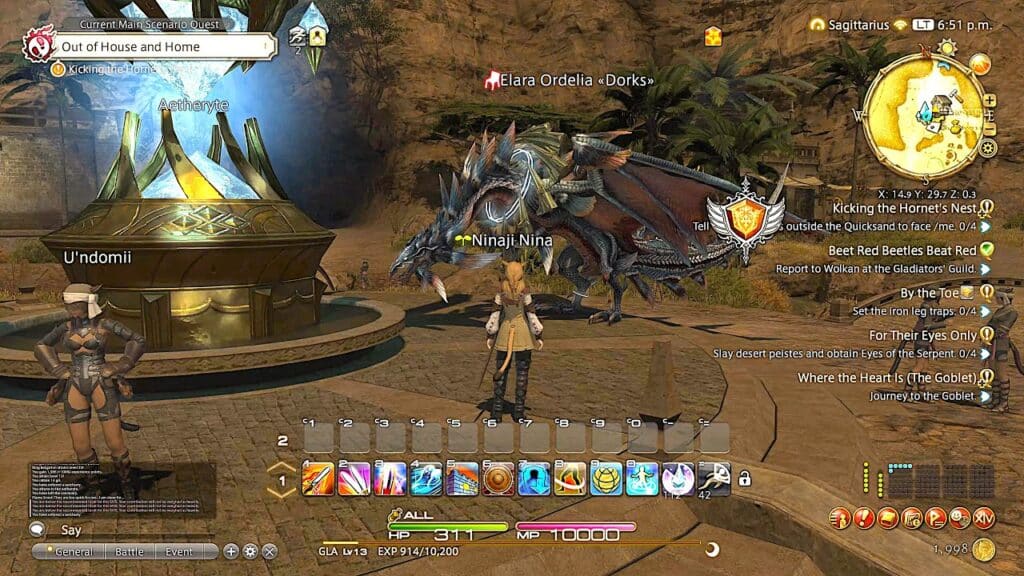
Despite their challenges, modern MMORPGs offer benefits that older games cannot always match.
Improved accessibility features, better interface design, advanced networking, modern combat systems, and broader platform support can make online worlds more welcoming.
Established commercial operators may also have larger support teams, more structured security processes, and clearer legal authority to distribute and maintain their games.
Modern development tools make it possible to create experiences that would have been technically difficult during the early years of MMORPG gaming.
The goal should not be to reject innovation.
It should be to combine modern technology with the social depth and meaningful progression that made earlier MMORPGs memorable.
Are Classic Private Servers Really Competing With Modern MMORPGs?
In some cases, yes.
Players have limited time, and spending an evening in a classic MMORPG means not spending that evening in another game.
But the competition is not always direct.
Someone returning to Ragnarok Online may be looking for an experience that a new action-oriented MMORPG does not attempt to provide.
The two games may serve different preferences.
Classic communities can also be sustained by relatively small groups whose loyalty does not depend on mass-market popularity.
A modern commercial MMORPG may need a substantially larger paying audience to justify its development and operating costs.
That makes raw player-count comparisons particularly difficult.
A small community can be successful at its own scale without becoming a viable model for a large commercial studio.
The Future of MMORPGs Is Not Necessarily Bigger Worlds
For years, MMORPG marketing has emphasized scale.
Bigger maps. More quests. More equipment. More activities. More systems.
Scale can be impressive, but it also creates expectations that developers must continually satisfy.
A more sustainable direction may involve focusing on fewer systems that generate deeper interactions.
A well-designed trading economy can create stories without requiring a new scripted quest every week.
Meaningful guild rivalries can sustain competition without constantly introducing stronger equipment.
Flexible character builds can encourage experimentation without requiring players to restart the entire game.
These systems are difficult to balance, but they can provide lasting value because players help create the experience.
The strongest MMORPGs do not merely deliver content to a passive audience.
They give communities the tools to create their own histories.
Final Thoughts: Players Stay for More Than the Game
Modern MMORPGs do not struggle because developers have forgotten how to make attractive worlds.
They struggle when the enormous cost of maintaining those worlds conflicts with player expectations for fairness, meaningful progression, social connection, and respect for their time.
Classic private servers can attract loyal players because they preserve familiar mechanics, recognizable communities, and experiences that some modern games no longer prioritize.
But they are not immune to financial problems, legal risks, unstable management, or declining populations.
The real lesson is not that old MMORPGs are automatically better than new ones.
It is that an MMORPG’s lasting value cannot be measured solely by graphics, map size, or the number of quests available at launch.
A virtual world becomes meaningful when players believe their time matters, their relationships matter, and the people responsible for the game can be trusted.
That is a lesson worth remembering for developers and players alike.
For more discussions of gaming culture, industry trends, and the future of online games, explore the latest features on FRANT.me.




Comments 0
Share your thoughts about this article.