 frant.me
Now imagine facing all of that as a tiny, smiling toy.
That’s the unusual idea behind Escape from Playtime, a cooperative survival horror game developed by Mob Entertainment, the studio behind Poppy Playtime.
Instead of following another human character exploring the factory, players take control of the Smiling Critters. These familiar toys must search for supplies, avoid dangerous creatures, and follow instructions from a mysterious voice that promises them a way out.
The game brings a different approach to the Poppy Playtime universe. Exploration is no longer just about uncovering a story. Players must work together, collect materials, and survive environments that can change between attempts.
With its Steam Early Access launch scheduled for October 21, 2026, Escape from Playtime has several ideas that could make it interesting for horror fans.
Here are 12 reasons why the game deserves attention, along with some concerns worth considering before jumping in.
1. A Different Perspective on the Poppy Playtime Universe
One of the most interesting things about Escape from Playtime is the decision to make the Smiling Critters playable characters.
In the main Poppy Playtime games, players usually explore the factory from a human perspective. The abandoned machinery, oversized rooms, and disturbing experiments make the environment feel threatening.
Escape from Playtime changes that relationship.
As a small toy, ordinary objects become much larger obstacles. A table might provide useful cover, while a narrow passage could become an escape route that a larger character cannot use.
This change of perspective has the potential to make familiar locations feel new again.
It also gives the Smiling Critters a more active role in the story. Rather than simply appearing as part of the factory’s disturbing history, they become the characters trying to survive it.
2. Playing with Friends Changes the Horror Experience
Survival horror often works by making players feel isolated. When you’re alone in a dark building, even a small noise can make you hesitate before opening the next door.
Escape from Playtime introduces cooperative multiplayer, allowing players to explore the factory with friends.
That changes the atmosphere immediately.
Having teammates means there are more people searching for supplies, watching corridors, and helping with objectives. However, it also creates opportunities for confusion.
One player might want to investigate a suspicious room while another believes the group should retreat. Someone could find an important item but become separated from the others while trying to bring it back.
These situations can make teamwork feel meaningful rather than optional.
The experience also has similarities to The Outlast Trials, another cooperative horror game where completing objectives requires players to manage danger and coordinate their actions.
Escape from Playtime has a different setting and structure, but both games explore what happens when survival depends on other people making sensible decisions.
3. Proximity Voice Chat Can Make Communication Risky
Communication is useful in multiplayer games, but Escape from Playtime makes it part of the tension.
The game features proximity voice chat, meaning players communicate according to their distance from one another.
This creates situations where staying together has obvious advantages.
A nearby teammate can warn you about a dangerous corridor or explain where they found an important resource. Someone farther away may be harder to coordinate with.
The system also supports the game’s horror atmosphere.
Imagine hearing a friend calling for help from another room, only for their voice to disappear as they move farther away.
Moments like that could make the factory feel much larger and more threatening.
Of course, voice communication needs to work reliably. If players struggle to understand one another because of technical problems rather than deliberate game design, the tension could quickly become frustration.
4. The Smiling Critters Make the Game More Distinctive
Horror games frequently rely on vulnerable human protagonists. Escape from Playtime takes a different direction by putting players in control of colourful toy characters.
The Smiling Critters have a deliberately cheerful appearance, which makes their situation particularly unsettling.
They look like characters that belong in a children’s television programme, yet they are forced to survive inside a factory filled with abandoned experiments and dangerous creatures.
That contrast is central to Poppy Playtime’s visual identity.
Something designed to appear friendly becomes disturbing when placed in the wrong environment.
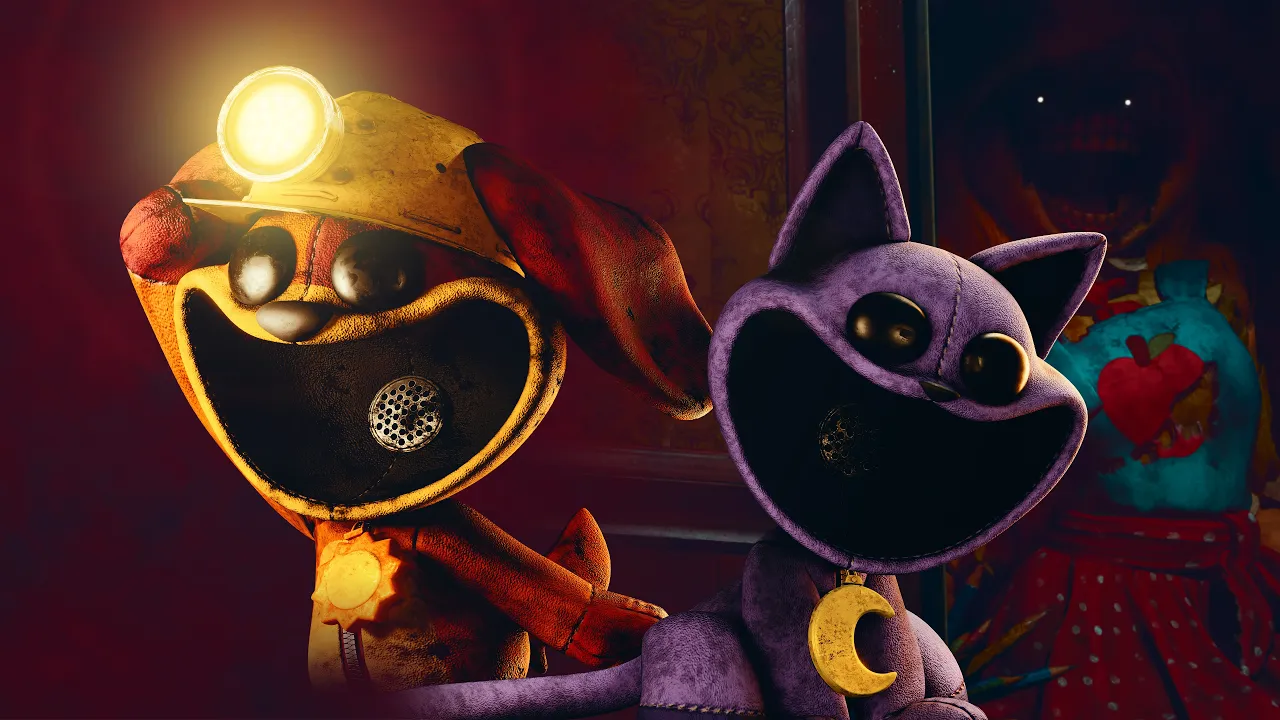
Mob Entertainment plans to include the full eight-character Smiling Critter roster in the initial Early Access release.
Having several playable characters should also help players connect with familiar faces from the wider franchise.
5. Every Mission Gives Players a Reason to Explore
Exploration becomes more interesting when players have something specific to accomplish.
In Escape from Playtime, a mysterious voice sends the Smiling Critters into different parts of the factory to collect materials and resources.
These supplies are supposedly needed for a construction project that could provide the toys with a safer home.
That gives each mission a straightforward objective: enter the factory, find what is needed, and return without being caught.
However, the process is unlikely to be simple.
Players must search dangerous rooms while avoiding hostile creations that patrol the facility.
Finding an item is only part of the challenge. The team must also figure out how to bring its supplies back safely.
This creates an interesting question during exploration: is it worth entering another room for additional resources, or is the risk becoming too great?
The best survival games make those decisions feel important.
6. The Factory Changes Between Runs
One of the biggest challenges for replayable horror games is keeping environments unpredictable.
Once players learn the safest route through a location, much of the original fear can disappear.
Escape from Playtime attempts to address this through procedurally generated environments.
The mysterious voice appears to influence the factory’s layout, creating sections that change between runs.
Players may explore classrooms, warehouses, testing laboratories, and the corridors connecting them.
Because the layout can change, memorising one successful route may not guarantee an easy escape next time.
Instead, players need to pay attention to their surroundings and adapt their plans.
This could be one of the game’s strongest features if the environments offer meaningful variety.
However, procedural generation comes with a challenge of its own. Randomised rooms can become repetitive if they lack interesting details or memorable encounters.
The long-term appeal will depend on whether each run feels like a new situation rather than the same collection of rooms arranged differently.
7. Hiding and Distractions Are More Important Than Fighting
Escape from Playtime is not presented as a traditional action game where players defeat every enemy they encounter.
Survival depends heavily on avoiding dangerous creatures.
Players can search for hiding spots, create distractions, and use alternative routes to escape threats.
That encourages a more cautious approach to exploration.
Instead of immediately running through a room, players may need to watch their surroundings and decide whether the area is safe.
Sometimes, the smartest decision could be waiting for an enemy to move away.
In other situations, creating a distraction might give a teammate enough time to retrieve an important item.
This type of gameplay works best when enemies behave consistently enough for players to learn from their mistakes without becoming completely predictable.
If players can understand why they were discovered, failure can become part of learning the game.
8. The Factory Feels Different When You’re Small
Character size is more than a visual detail in Escape from Playtime.
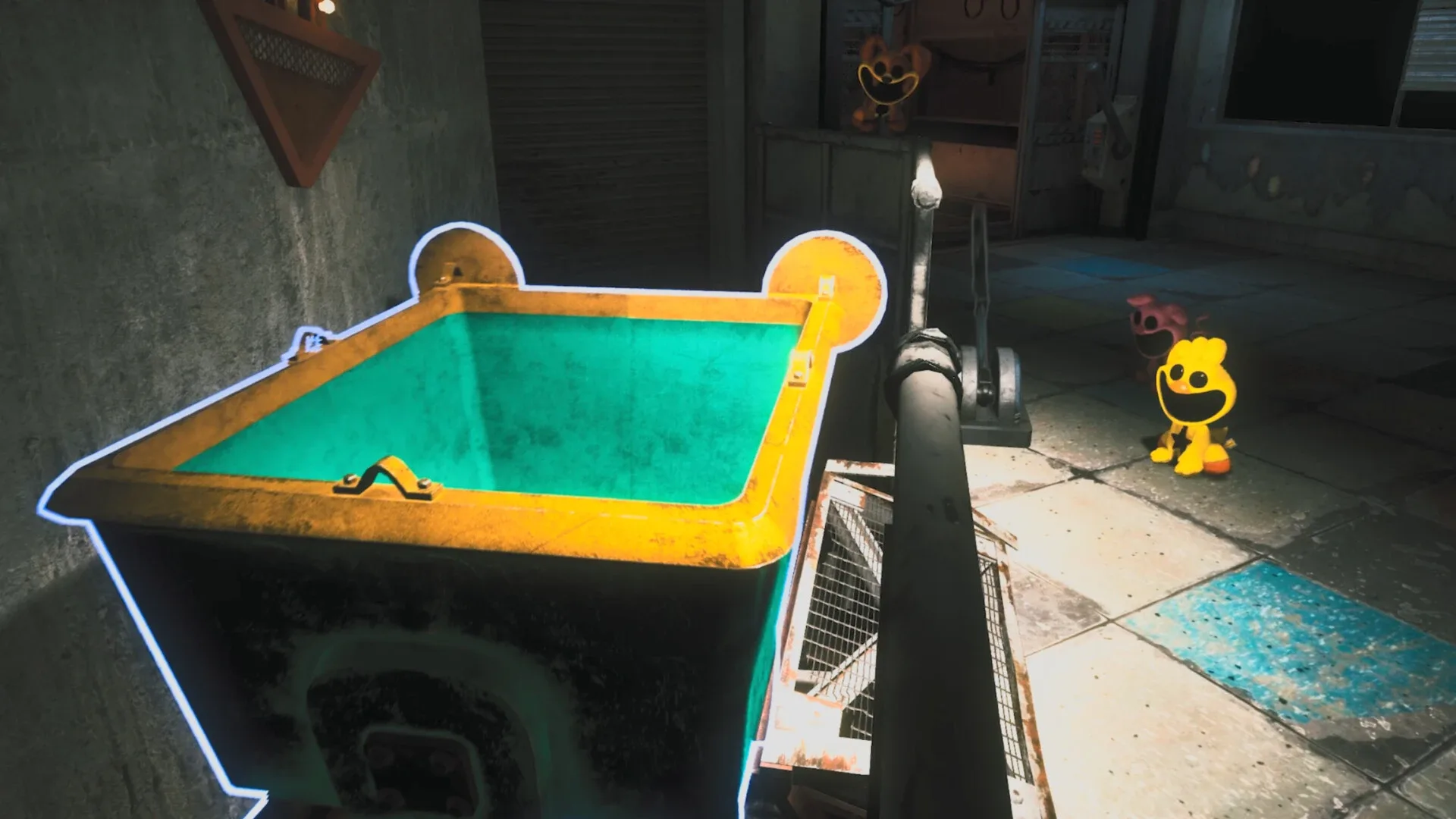
Players can crawl, jump, and climb through different parts of the factory as small toys.
This opens up opportunities for exploration that would not make sense from a normal human perspective.
A narrow opening might lead to another room, while objects that would normally be insignificant could become obstacles.
The idea is particularly interesting because Playtime Co. is already known for its oversized industrial spaces and unsettling children’s environments.
Seeing these locations from a smaller viewpoint could make the factory feel even more intimidating.
It also creates opportunities for creative level design.
Instead of relying only on locked doors and obvious corridors, the developers can encourage players to search for unusual paths through the environment.
The important question is whether those movement options remain useful throughout the game rather than becoming occasional scripted moments.
9. The Mysterious Voice Gives the Story a Strong Hook
Escape from Playtime introduces a mystery that goes beyond simply surviving the factory.
Players receive instructions from an unidentified voice that promises safety in exchange for collecting materials.
At first, following these instructions might seem like the only reasonable option.
The factory is dangerous, and the Smiling Critters need somewhere safe to live.
However, there is no guarantee that the voice is telling the truth.
Who is giving these orders? What exactly is being constructed? And why does the project require so many resources?
These questions give the missions a larger purpose.
Instead of collecting supplies only to earn rewards, players may gradually discover that their work is connected to something much more disturbing.
That uncertainty fits naturally into the Poppy Playtime universe, where apparently harmless ideas often conceal darker intentions.
10. Familiar Poppy Playtime Locations Could Reveal New Secrets
Fans of Poppy Playtime already know that Playtime Co. has a complicated history.
The abandoned factory contains evidence of experiments, failed projects, and the disturbing treatment of living toys.
Escape from Playtime offers another opportunity to explore that setting.
According to Mob Entertainment, players can uncover clues that connect the game to the wider Poppy Playtime story.
That makes the adventure potentially interesting even for players who are more invested in the franchise’s mysteries than its multiplayer mechanics.
Environmental details could provide context for events that were only briefly mentioned in earlier games.
However, the developers need to balance storytelling with the repeated-run structure.
If important discoveries are buried behind too many similar missions, players may lose interest before finding them.
The most effective approach would be to make exploration rewarding without requiring every player to spend hours searching for obscure clues.
11. Unexpected Gameplay Events Could Keep Teams Alert
Survival games become less interesting when players know exactly what will happen next.
Escape from Playtime has shown gameplay events that can change how a run unfolds.
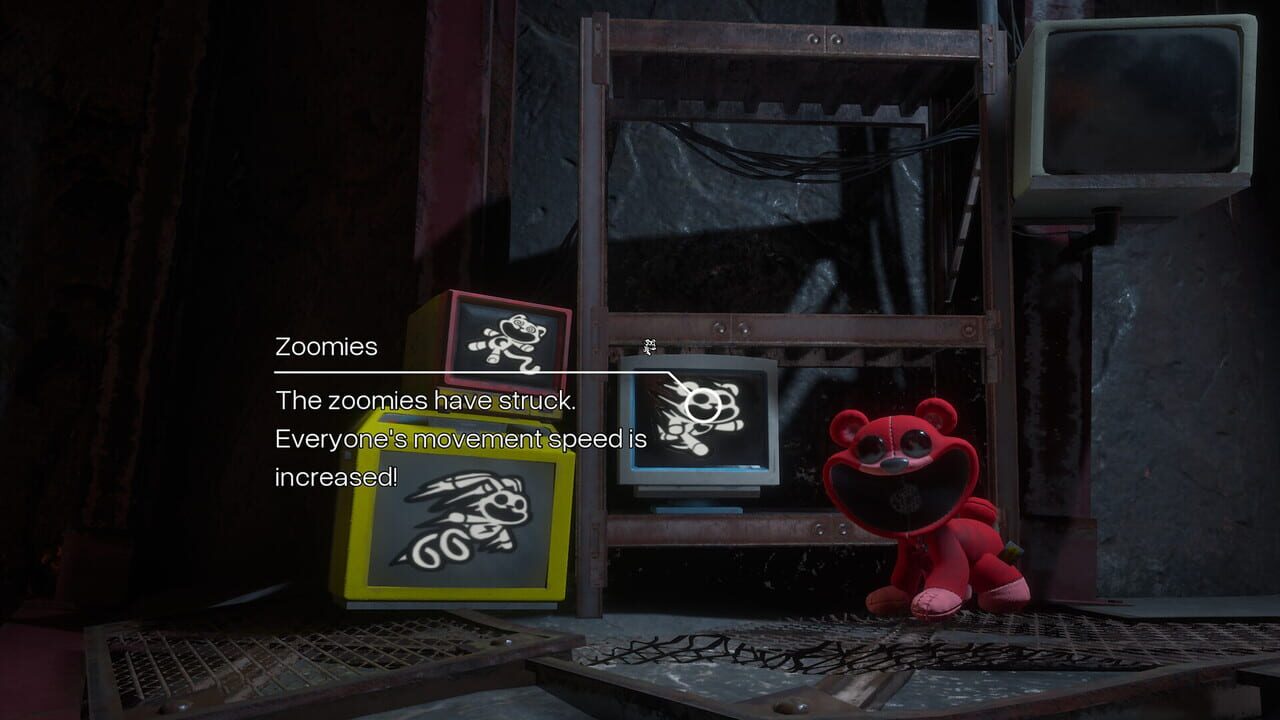
One example is an event called Zoomies, which increases everyone’s movement speed.
At first, moving faster sounds like an obvious advantage.
However, sudden changes can also make it harder for a team to maintain control, particularly when players are trying to move carefully through dangerous rooms.
This kind of event could introduce moments of chaos without requiring a completely different enemy or environment.
It also gives players another reason to communicate.
A team might need to adjust its approach immediately when the rules change.
The success of these events will depend on how often they appear and whether they create interesting decisions instead of simply interrupting gameplay.
12. Early Access Gives Players a Chance to Influence Development
Escape from Playtime is being developed with community feedback in mind.
Mob Entertainment has explained that Early Access will allow players to share opinions about features, environments, items, characters, and balancing.
The initial release is planned to include the eight Smiling Critters, one starter zone, and a core selection of enemies.
Additional content and improvements are expected as development continues.
This approach gives players an opportunity to help shape the game’s future.
However, Early Access also means accepting uncertainty.
Features can change, technical issues may appear, and planned content may take longer than expected.
Players who enjoy following a game’s development may find this process rewarding.
Those who prefer a complete experience with a large amount of finished content may be better off waiting for future updates.
What Could Make Escape from Playtime Disappointing?
Despite its interesting ideas, Escape from Playtime still faces several challenges.
Limited Content at Launch
The initial Early Access version is planned around one starter zone.
That may be enough to introduce the core mechanics, but the game will need meaningful variety to keep players returning over time.
Procedurally generated layouts can help, although changing room arrangements alone will not guarantee long-term replayability.
Repetitive Resource Collection
Collecting materials provides a clear objective, but repeating the same task can eventually become predictable.
The developers will need to introduce enough variation in enemies, environmental hazards, and mission situations to prevent the gameplay loop from feeling repetitive.
Multiplayer Communication Problems
Proximity voice chat can create tension, but it also depends on players being willing and able to communicate.
Groups that prefer silent play may have a different experience from friends who coordinate constantly.
The Challenges of Early Access
Players should expect the possibility of bugs, balance adjustments, and unfinished features.
Buying an Early Access game means supporting something that is still being developed, not purchasing a guaranteed final version.
Escape from Playtime PC System Requirements
According to the game’s Steam listing, the following hardware specifications are provided for the Windows version.
| Component | Minimum | Recommended |
|---|---|---|
| Operating System | Windows 10/11, 64-bit | Windows 10/11, 64-bit |
| Processor | Intel Core i3-9100 / AMD Ryzen 5 3500 | Intel Core i9-11900K / AMD Ryzen 9 5900X |
| Memory | 8 GB RAM | 16 GB RAM |
| Graphics | Nvidia GTX 1650 / AMD Radeon RX 470 | Nvidia RTX 3070 / AMD Radeon RX 6800 XT |
| DirectX | Version 12 | Version 12 |
These are the developer’s listed requirements rather than independently tested performance targets. Actual performance may vary depending on hardware, settings, and future updates.
Who Should Play Escape from Playtime?
Escape from Playtime may appeal to several different audiences.
- Poppy Playtime fans: Players interested in exploring more of Playtime Co. and its disturbing history.
- Co-op horror enthusiasts: Groups looking for a survival experience built around communication and shared objectives.
- Exploration fans: Players who enjoy searching unfamiliar environments and finding alternative routes.
- Mystery lovers: Anyone interested in discovering the identity and intentions of the mysterious voice.
- Early Access supporters: Players willing to provide feedback and follow the game’s development.
Frequently Asked Questions About Escape from Playtime
What is Escape from Playtime?
Escape from Playtime is a cooperative survival horror game set in the Poppy Playtime universe. Players control the Smiling Critters and explore an abandoned toy factory while collecting resources and avoiding dangerous creatures.
When is Escape from Playtime coming out?
The announced Steam Early Access release date is October 21, 2026. Availability and launch details should be checked on Steam for the latest information.
Who developed Escape from Playtime?
The game is developed and published by Mob Entertainment, the studio behind the Poppy Playtime franchise.
Can Escape from Playtime be played solo?
Yes. The game supports single-player as well as online cooperative play.
How many people can play Escape from Playtime together?
Mob Entertainment originally described the standard cooperative experience as supporting one to four players. Steam listings have also shown support for up to eight players, so players should check the current version’s lobby limits before organising a larger group.
Is Escape from Playtime connected to Poppy Playtime?
Yes. The game takes place in the same universe and features the Smiling Critters, the Playtime Co. factory, and story elements connected to the wider franchise.
Is Escape from Playtime available on consoles?
The confirmed initial release is for Windows PC through Steam. Mob Entertainment has said that other platforms may be considered later, but console availability has not been confirmed.
Final Verdict: Is Escape from Playtime Worth Playing?
Escape from Playtime has an interesting foundation because it approaches the Poppy Playtime universe from a completely different perspective.
Playing as the Smiling Critters makes the familiar factory feel more threatening, while cooperative survival introduces decisions that aren’t usually part of the main series.
Players must decide when to explore, when to hide, and whether separating from their teammates is worth the risk.
The mysterious voice also gives the experience a reason to exist beyond simply surviving another horror encounter.
There are still important questions about content variety, long-term replayability, and how well the procedural environments will work in practice.
Its Early Access status means those questions may not have complete answers immediately.
However, for players who enjoy cooperative horror games and want another opportunity to explore the darker side of Playtime Co., Escape from Playtime is certainly worth watching.
The real test will be whether its combination of teamwork, exploration, and unpredictable danger remains entertaining after the initial scares wear off.




Comments 0
Share your thoughts about this article.