 frant.me
Final Fantasy XVI originally launched on PlayStation 5 in June 2023. It later arrived on PC in September 2024 and Xbox Series X|S in June 2025.
With several ways to experience the game, newcomers may wonder whether it is worth their time.
Here are nine reasons why Final Fantasy XVI deserves a place on your gaming list, along with a few things worth knowing before you start.
1. Clive Rosfield Has a Story Worth Following
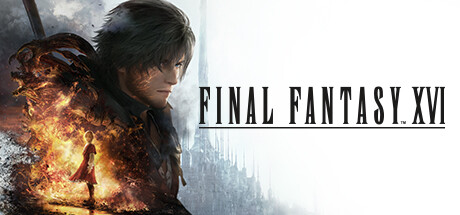
One of the biggest reasons to play Final Fantasy XVI is its main character.
Clive Rosfield begins his journey as the eldest son of the ruling family of Rosaria. Although he does not inherit the power of the Phoenix, he becomes the First Shield of Rosaria and takes responsibility for protecting his younger brother, Joshua.
Joshua is the Dominant of Phoenix, one of the powerful Eikons that play an important role in Valisthea.
However, a terrible event changes Clive’s life and sends him down a path of revenge.
What makes his journey interesting is how his goals change over time.
At first, Clive is driven by anger and loss. As he meets new allies and discovers more about the world, he begins questioning the systems that control people’s lives.
His story gradually becomes less about punishing one enemy and more about deciding what kind of future is worth fighting for.
This gives the adventure a stronger emotional foundation.
Players who enjoy character-driven RPGs may recognize similar themes of identity and personal choices in Cyberpunk 2077, although the two games approach their stories differently.
Final Fantasy XVI follows a more defined protagonist and a largely linear narrative. The appeal comes from watching Clive change rather than creating a completely different version of him.
2. The Eikon Battles Are Some of the Game’s Biggest Attractions
Final Fantasy has always been known for its powerful summoned creatures.
Final Fantasy XVI takes that idea much further by making Eikons central to both the story and gameplay.
These enormous beings possess extraordinary power, and certain individuals known as Dominants can channel or transform into them.
When two Eikons clash, the result can be a battle that looks completely different from an ordinary encounter.
Instead of fighting a small enemy on the ground, players may find themselves controlling Ifrit against another gigantic creature.
The scale of these encounters is impressive.
Massive attacks, collapsing environments, and dramatic camera movements turn Eikon battles into some of the adventure’s most memorable moments.
They also help show how dangerous these creatures are to the people living in Valisthea.
However, spectacle comes with a trade-off.
Some Eikon encounters are heavily scripted, giving players fewer tactical choices than regular combat. Players looking for constant mechanical freedom may find certain sections more cinematic than challenging.
Even so, these battles provide something different from the usual sword fights and make major story moments feel important.

3. Combat Feels Faster Than Traditional Final Fantasy Games
Players who associate Final Fantasy with turn-based battles may be surprised by how Final Fantasy XVI plays.
Rather than choosing attacks from a traditional command menu, players control Clive directly during combat.
He can attack with his sword, use magic, dodge incoming strikes, and activate Eikonic abilities.
These abilities allow players to create different combinations of attacks.
For example, an ability that launches enemies into the air can be followed by another attack designed to deal damage before they recover.
Players can also use powerful abilities to weaken an enemy’s Will gauge, leaving them vulnerable to additional damage when staggered.
This creates a rhythm where timing and ability selection become important.
Using every powerful attack immediately may leave Clive without useful options when an enemy becomes vulnerable.
Saving certain abilities for the right moment can be more effective.
The combat becomes more interesting as Clive gains additional powers.
Still, the system will not appeal to everyone.
Players who prefer managing an entire party or carefully planning turn-based encounters may miss those traditional RPG elements.
4. Valisthea Is More Than a Beautiful Fantasy World
Final Fantasy XVI takes place in Valisthea, a land divided between powerful nations.
These kingdoms depend on enormous Mothercrystals, which provide access to the aether used for magic.
But the world is facing a serious problem.
A phenomenon known as the Blight is spreading across the land, leaving areas lifeless and threatening the future of its people.
As resources become increasingly important, tensions between nations grow.
War, political ambition, and control over magical power shape much of the story.
This makes Valisthea more interesting than a collection of attractive landscapes.
Its conflicts affect the lives of ordinary people, particularly Bearers, individuals who can use magic without crystals but often face harsh treatment.
Through Clive’s journey, players see how different communities respond to these problems.
Some people benefit from the existing system, while others struggle simply to survive.
These differences help explain why the world needs to change.
However, players should not expect a fully open-world RPG.
Final Fantasy XVI uses connected regions and story-driven locations rather than one enormous seamless map.
That structure helps maintain the narrative’s direction, but it offers less freedom than games built primarily around open-world exploration.
For players who prefer discovering fantasy environments at their own pace, GuideFall’s coverage of AION 2 explores a different approach to world design and exploration.
5. The Supporting Characters Give the Story More Meaning
Clive may be the central character, but his journey would feel much weaker without the people around him.
Throughout the adventure, he develops relationships with allies who have their own reasons for fighting.
Jill Warrick is particularly important because of her connection to Clive’s past.
Her experiences also reveal how Dominants can be treated as weapons rather than ordinary people.
Cidolfus Telamon, commonly known as Cid, brings another perspective to the story.
He believes the existing treatment of Bearers and Dominants must change, and his goals influence Clive’s understanding of the world.
These relationships make the larger political conflict feel more personal.
Instead of simply hearing that Valisthea is suffering, players meet people whose lives have been shaped by its problems.
Not every supporting character receives the same amount of development, and some could have benefited from more time in the spotlight.
Still, the main relationships give Clive’s journey emotional weight.
6. Eikonic Abilities Let Players Experiment With Different Fighting Styles
One of the more enjoyable parts of Final Fantasy XVI is experimenting with Clive’s abilities.
As the story progresses, Clive gains access to powers associated with different Eikons.
Each set of abilities offers different ways to approach combat.
Some attacks are useful for closing the distance between Clive and an enemy. Others focus on dealing heavy damage, controlling groups, or creating opportunities for follow-up attacks.
Players can unlock and upgrade abilities using points earned through progression.
Eventually, mastering abilities also provides greater flexibility when building a preferred combination of powers.
This means players do not have to rely on exactly the same attacks throughout the adventure.
A player who enjoys aggressive combat may choose abilities that maintain pressure on enemies.
Someone who prefers a more careful approach can focus on counters, defensive timing, and attacks that create openings.
However, the customization is mainly centered on combat abilities.
Final Fantasy XVI does not offer the same depth of party management, equipment variety, or job customization found in some earlier entries.
Its strength lies in letting players experiment with Clive’s fighting style rather than managing a large group of characters.
7. The Soundtrack Makes Important Moments Even Better
Music has always been an important part of Final Fantasy, and Final Fantasy XVI continues that tradition.
Composed primarily by Masayoshi Soken, the soundtrack moves between quiet emotional themes and powerful orchestral pieces.
During major battles, the music helps communicate the scale of the encounter.
When the story slows down, softer compositions give players time to reflect on what has happened.
That contrast matters because Final Fantasy XVI regularly moves between personal conversations and enormous conflicts.
A dramatic battle may feel exciting on its own, but the right music can make it much more memorable.
The soundtrack also gives different locations and characters their own atmosphere.
Players who enjoy games with strong musical identities may find themselves remembering certain scenes long after finishing the story.
Of course, a good soundtrack cannot fix weak gameplay or poor pacing.
But in Final Fantasy XVI, music is one of the elements that helps connect its cinematic presentation with the emotional side of the adventure.
8. The DLC Adds More Reasons to Return to Valisthea
Players who finish the main story and want more content can explore two additional chapters: Echoes of the Fallen and The Rising Tide.
Echoes of the Fallen
This expansion sends Clive and his allies to investigate mysterious dark crystals appearing on the black market.
The investigation eventually leads to the Sagespire, an abandoned tower connected to the ancient Fallen civilization.
The DLC focuses on additional combat challenges, new enemies, and discoveries about Valisthea’s past.
The Rising Tide
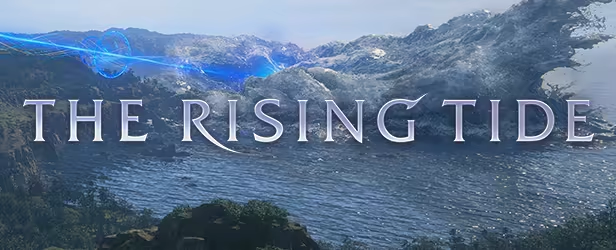
The second expansion introduces a new adventure involving Leviathan, the lost Eikon of Water.
Clive travels to Mysidia, where he encounters new characters and learns more about a forgotten part of the world’s history.
The Rising Tide also adds new combat abilities, equipment, and encounters.
These expansions are particularly appealing to players who enjoy the main game’s action and want more opportunities to use its combat systems.
However, both DLC chapters require the base game, and their main quests become available only after reaching specific late-game story conditions.
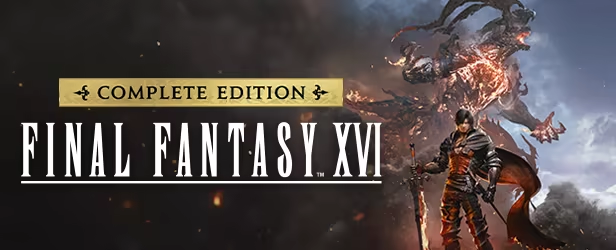
Players buying the game for the first time can consider the Complete Edition, which includes both expansions.
9. You Don’t Need to Play Earlier Final Fantasy Games First
Seeing the number XVI in the title might make newcomers wonder whether they need to finish fifteen other games before starting.
Fortunately, that isn’t necessary.
Most mainline Final Fantasy games tell independent stories with their own worlds, characters, and gameplay systems.
Final Fantasy XVI introduces Valisthea and its characters without requiring knowledge of earlier numbered entries.
Returning fans will recognize familiar ideas such as chocobos, summons, crystals, and recurring monster designs.
But understanding these references isn’t essential to following Clive’s story.
This makes Final Fantasy XVI a reasonable starting point for players interested in the franchise but unsure where to begin.
It is also worth remembering that Final Fantasy has explored many different styles over the years.
Players who prefer action and cinematic storytelling may find Final Fantasy XVI more appealing, while those who enjoy strategic command battles might prefer a different entry.
What Could Make Final Fantasy XVI Disappointing?
Despite its strengths, Final Fantasy XVI is not perfect.
One of its biggest weaknesses is the uneven pacing between major story missions.
The main campaign regularly delivers dramatic moments, but some quieter sections involve simple objectives that do not feel equally important.
Side quests can also be inconsistent.
Some provide meaningful information about the people of Valisthea, while others rely on familiar tasks such as traveling to a location, speaking with someone, or defeating a group of enemies.
The RPG systems are another point worth considering.
Players expecting deep equipment customization, party management, or complicated character builds may find the progression relatively straightforward.
Combat can also feel easier than expected during parts of the main story, particularly for players experienced with action games.
On PC, hardware requirements deserve attention as well. The Steam version requires an SSD and lists 170 GB of available storage, alongside 16 GB of RAM.
These limitations do not necessarily make the game a bad choice.
They simply show that Final Fantasy XVI prioritizes cinematic storytelling and direct action over some of the systems traditionally associated with RPGs.
Final Fantasy XVI PC System Requirements
Before purchasing the PC version, players should check the official system requirements.
| Component | Minimum | Recommended |
|---|---|---|
| Operating System | Windows 10 / 11 64-bit | Windows 10 / 11 64-bit |
| Processor | AMD Ryzen 5 1600 / Intel Core i5-8400 | AMD Ryzen 7 5700X / Intel Core i7-10700 |
| Memory | 16 GB RAM | 16 GB RAM |
| Graphics | Radeon RX 5700 / Intel Arc A580 / GTX 1070 | Radeon RX 6700 XT / RTX 2080 |
| Storage | 170 GB SSD | 170 GB SSD |
| Performance Target | 720p / 30 FPS | 1080p / 60 FPS |
These are the official targets listed on Steam, not independently measured performance results. Actual performance can vary depending on hardware and graphics settings.
Should You Play Final Fantasy XVI in 2026?
Final Fantasy XVI remains an interesting choice for players who enjoy story-driven action RPGs.
Its strongest qualities are Clive’s emotional journey, the enormous Eikon battles, and a combat system that encourages players to experiment with different magical abilities.
The world of Valisthea also gives the adventure more depth through its political conflicts and the struggles of ordinary people.
However, players should understand what kind of game they are getting.
Final Fantasy XVI is not a traditional party-based RPG, and it does not offer the freedom of a fully open-world adventure.
It is a focused single-player experience built around a defined story, spectacular battles, and one main character.
For players who enjoy those elements, there is plenty to appreciate.
Those who are still unsure can try the free demo available on supported storefronts. It introduces the opening story and provides a chance to experience the combat before purchasing the full game.
Ultimately, the best reason to play Final Fantasy XVI is not simply that it belongs to a famous franchise.
It is the way the game combines personal tragedy, large-scale fantasy conflicts, and fast-paced action into an adventure that has its own identity.
Even if it doesn’t deliver everything longtime RPG fans expect, Final Fantasy XVI shows how the series can take a different direction while keeping the emotional storytelling that helped make Final Fantasy popular in the first place.
Frequently Asked Questions
Is Final Fantasy XVI worth playing?
Yes, especially for players who enjoy cinematic stories, real-time action combat, and fantasy adventures. However, those looking for deep party management or traditional turn-based battles may prefer another Final Fantasy game.
Is Final Fantasy XVI an open-world game?
No. Final Fantasy XVI features several explorable regions connected through its story progression, but it is not a fully seamless open-world game.
Can I play Final Fantasy XVI without playing previous games?
Yes. Final Fantasy XVI tells a standalone story with its own characters and world. Knowledge of earlier games is not required.
Is Final Fantasy XVI available on PC?
Yes. Final Fantasy XVI launched on PC through Steam and the Epic Games Store on September 17, 2024. It is also available on PlayStation 5 and Xbox Series X|S.
Does Final Fantasy XVI have multiplayer?
No. Final Fantasy XVI is designed as a single-player action RPG.
Does Final Fantasy XVI have a free demo?
Yes. A free demo is available on supported platforms, allowing players to experience the opening section before buying the full game.


Comments 0
Share your thoughts about this article.